
You can have a beverage that sells well in retail, gets repeat orders online, and still gets crushed at Amazon's dock because the math was wrong. The shipment looks fine on paper, the bottles are sealed, the labels are clean, and then Seller Central lights up with a rejection, a containment notice, or a disposal charge you didn't budget for. That's the ugly part of selling beverages on Amazon FBA requirements, the product usually isn't the problem, the timing is.
If you've ever watched good inventory sit while the FC decides whether it's eligible, you already know the margin damage happens fast. Beverage brands don't lose money because they forgot how to make a drink, they lose money because they misread shelf life, packaging, labels, or facility compliance. That's where the traps live.
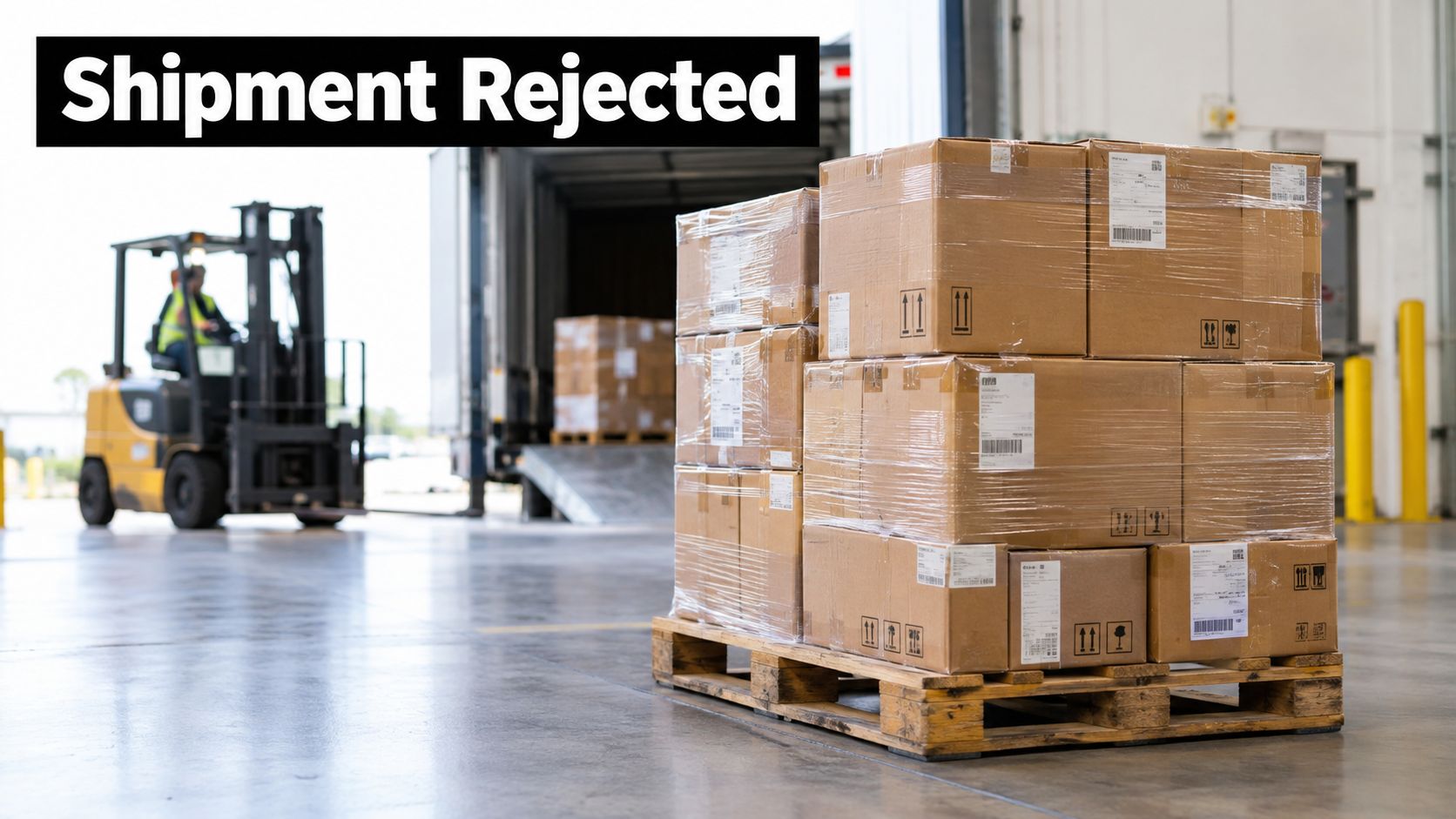
Why Most Beverage Sellers Fail Their First Amazon Shipment
A kombucha brand can make a clean product and still get punished by inbound math. The cases are sealed, the packout looks right, the listing is live, and the FC rejects the shipment because the inventory lands with 240 days of shelf life left, while Amazon requires at least 270 days for many expiration-dated grocery products in this category. On paper that sounds like a small gap. In practice, it turns sellable stock into a problem shipment.
What hurts next is the waiting. The boxes can sit in containment while the seller weighs return freight against disposal, and every extra day makes the economics worse. If the units arrive after expiration, Amazon may dispose of them and the seller may not be reimbursed, which means freight, prep, and production costs can disappear in one move. Amazon's beverage rules also require the date in the inbound data to match the printed product date, with only one expiration date per box for a given ASIN, so mixed-lot production runs get messy fast, Amazon's expiration-date rules for FBA beverages.
The five places the shipment usually breaks
Practical rule: if you cannot explain the shelf-life buffer in one sentence, the shipment is probably too tight.
The failure usually comes from one of five places, and all of them are operational:
- Shelf-life buffer, the shipment does not have enough remaining life when it lands.
- Lot mixing, the box contains more than one expiration date for the same ASIN, which Amazon does not want.
- Label mismatch, the printed date and the inbound record do not line up.
- Packaging weakness, the case survives your warehouse but not Amazon handling.
- Forecasting fantasy, you assumed velocity that the market never delivered.
The common mistake is treating beverage FBA like a normal shipment. It is manufacturing date, transit time, receiving delay, sell-through, and removal risk stacked together. A drink can be good and still die on timing alone.
A smart seller runs the shelf-life math before sending the freight. Start with the printed date, subtract transit, subtract the likely FC receiving delay, then subtract the time it will take to sell through the units. If the remainder is thin, Amazon can destroy the stock before you ever get traction. That is the operational math most guides skip, and it is usually where beverage margins go to die.
If you want the basic FBA model refresher, the overview on how Fulfillment by Amazon works is useful, but beverage sellers have to think one layer deeper than a standard FBA operator.
Beverage Product Eligibility on Amazon FBA
Not every sealed drink belongs in standard FBA, and that's where people waste weeks arguing with reality. Start with alcohol by volume, because Amazon treats non-alcoholic beverages as products containing more than 0.00% and less than 0.5% alcohol by volume. That threshold matters for kombucha, botanical drinks, fermented sodas, and any formula that can drift into a gray zone after processing or storage. Once you step outside that band, you're no longer in the simple path most operators expect, Amazon's grocery and beverage guidance.
Sort the SKU before you build the listing
Shelf-stable drinks usually have the cleanest path through FBA, but “shelf-stable” still doesn't mean “carefree.” A canned coffee or sparkling water can be technically eligible and still fail because the label, packaging, or date handling is sloppy. Temperature-sensitive products, refrigerated items, and frozen foods are a different animal, and Amazon has separate restrictions for some of them.
Here's the practical split I use:
- Standard shelf-stable beverages, these are the least complicated if the packaging and dates are clean.
- Low-ABV fermented drinks, these need extra attention because the formulation itself can create compliance questions.
- Functional or supplement-adjacent drinks, these can pull in different labeling expectations.
- Temperature-sensitive beverages, these are often a bad fit for ordinary FBA.
- Anything approaching alcohol territory, most sellers here need a different program entirely.
A sealed bottle is not the same thing as an FBA-eligible bottle. Eligibility depends on formulation, labeling, and whether Amazon can move it through the network without creating risk.
Amazon also says some frozen and refrigerated food products aren't eligible, and its broader grocery guidance makes clear that food and beverage products must comply with applicable laws, not just warehouse prep rules. In practice, that means you should segment every new beverage SKU before you create the offer, then decide whether it belongs in standard FBA, a temperature-controlled path, or nowhere near Amazon fulfillment at all. That decision is cheaper up front than it is after the FC has your cartons.
FDA Registration and Regulatory Compliance for Beverage Brands
Amazon will not clean up your regulatory file for you. If you sell beverages into the U.S., the FDA layer exists whether the listing is live or not, and Amazon approval doesn't replace it. The FDA says food offered for import into the United States must comply with U.S. food-labeling laws, required information must be in English or the predominant language of the relevant U.S. territory, and beverage labels must be truthful and not misleading, FDA nutrition and food labeling guidance.
The facility file has to be real, not implied
For a beverage manufacturer or importer, the first thing to lock down is facility registration. That includes every place that manufactures, processes, packs, or holds the product, including contract manufacturers and third-party warehouses. The obligation generally applies to food intended for human consumption unless an exemption applies, and the registration needs to stay current with the required information, category details, and traceability records, FDA facility registration overview.
The operational trap is simple, brand owners assume the Amazon listing, the UPC, or the trademark somehow proves compliance. It doesn't. Amazon's side and FDA's side are different systems, and both have to work.
Build the document pack before anyone asks for it
A good document pack keeps you from scrambling when account health starts asking questions. Keep the following organized:
- Facility registration evidence, for each applicable facility.
- Manufacturing and import records, so you can answer traceability questions.
- Lot traceability records, because beverages move by batch.
- Labels and label proofs, so the current version is easy to show.
- Certificates and supplier specifications, for ingredient and sourcing verification.
FDA guidance also notes that many substances intentionally added to beverages can be food additives subject to premarket approval under section 409 of the Federal Food, Drug, and Cosmetic Act and 21 CFR Part 171. That's where functional drinks get messy fast, because the ingredient story, the claim language, and the labeling format all have to agree. If they don't, you're building a future account-health problem and an eventual retail problem at the same time.
Expiration Dating and Inventory Rotation for FBA Beverages
Beverage brands lose money here because the shelf life you print is not the shelf life Amazon sees. Drinks like coffee, tea, soda, and juice are treated as expiration-dated products, and inventory has to reach the fulfillment center with enough life left to clear receiving, storage, and customer demand. Amazon also expects time for the product to be consumed, plus an additional buffer, which is why a long date on the label does not guarantee the case is fit for FBA. For the current expiration rules behind that cutoff, see our guide on Amazon FBA expiration date requirements for food products.
Run the math before you book freight
The shelf-life buffer has to be calculated from the warehouse's side, not the co-packer's. Start with the manufacturing date, subtract transit time, subtract receiving delay, then subtract how long the units may sit before sale. What remains is the buffer, and that number decides whether the shipment is manageable or a future destruction charge.
A workable operator's model is simple:
- Manufacturing date, the clock starts here.
- Transit time, ocean, truck, or parcel.
- Receiving delay, Amazon does not always move fast.
- Sell-through window, how long the stock may sit before moving.
- Removal threshold, the point where disposal risk becomes real.
If the math says a shipment lands too close to expiry, do not send it just because the product is good. The FC will not care that the formula tastes great or that the branding is strong. It cares whether the units can move through receiving, storage, and customer fulfillment without crossing the expiration line.
Operator takeaway: for beverages, inventory planning is a dating problem before it is a demand problem.
Multipacks and box rules are where teams slip
Amazon says each inbound box may contain only one expiration date per ASIN, so mixed production runs create a packing problem fast. If you bottle multiple lots with different dates, split them cleanly or you hand receiving a mess. For multipacks, the outer expiration date has to match the earliest date inside the package, so random case building turns into a compliance mistake.
For the full labeling and dating rules behind this, see our guide on Amazon FBA expiration date requirements for food products. FIFO, lot-level forecasting, and a sane replenishment cadence matter because they keep old stock from sitting behind fresh stock until Amazon's date rules turn it into a disposal event. The packaging and date logic is the operating system of beverage FBA, and sloppy rotation is how good margin gets destroyed.
Packaging, Labeling, and Leak Prevention Standards
A beverage shipment can fail for two reasons that wreck margin fast. It leaks and contaminates nearby stock, or it reaches Amazon with incomplete labeling and gets bounced. Amazon wants each unit fully enclosed, sealed, and packed so it can survive FBA handling without turning the warehouse into a cleanup job, Amazon Grocery & Gourmet Foods requirements.
What passes at the FC and what usually gets wrecked
A bottle can look perfect on the pallet and still fail in sortation. Swing-top closures hold up on a shelf and can fail under vibration if they are not tested. Pouch-in-box formats can puncture when load pressure builds. Shrink wrap on multipacks tears at the corners if the edges are not reinforced, and once one unit is exposed, Amazon may treat the whole case as a packaging issue.
That is why beverage prep needs more than a clean label and a decent carton. Test for leak paths, edge failure, and barcode readability on curved surfaces. The closure, seal, and outer carton all have to handle warehouse abuse, not just shelf appeal. Before you lock carton specs, review our guide on packaging for e-commerce to see how transit handling changes packaging choices.
Labels need to survive both Amazon and FDA review
Amazon and FDA care about the label for different reasons. The unit needs the product name, manufacturer information, ingredients, nutrition facts, allergen disclosures, and a permanently marked expiration date. Amazon treats sell by, use by, best by, best before, and best if used by dates as expiration dates, and sellers may not remove or alter them, Amazon's expiration date rule for grocery products.
If you want a practical outside view on how packaging affects economics, not just appearance, the packaging for growth guide is useful. For Amazon, the pressure is higher. A weak package does not just look sloppy, it creates avoidable costs.
Barcode placement is the other place sellers get burned. Curved bottles distort scans, and poor scan rates create receiving delays you do not want. Verify FNSKU placement before a full production run, and make sure the label is visible, readable, and not fighting the package shape. That small check can save you from inventory sitting in limbo while the fulfillment center sorts out what it can and cannot scan.
Pre-Launch Checklist and Troubleshooting for Beverage Sellers
The cleanest beverage launches I've seen are the ones where the team acted like the shipment could get rejected, because sometimes it does. Before you send anything to Amazon, confirm the facility file is current, the product fits the right eligibility bucket, the label matches FDA and Amazon requirements, and the packaging has already survived abuse testing. If any one of those is fuzzy, fix it before you book inbound freight.
The checklist that keeps you out of trouble
Use this sequence before the first inbound plan:
- Verify facility registration, every applicable site needs to be listed and current.
- Confirm category fit, standard FBA, temperature-sensitive, or a different path.
- Audit the label, nutrition, allergens, product identity, and expiration handling.
- Test packaging, drop, vibration, and temperature exposure all matter.
- Model shelf life, make sure projected arrival still leaves enough usable time.
- Validate barcode placement, curved containers need real scan checks.
- Assemble the document pack, registration, specs, certificates, and proofs.
- Configure Seller Central correctly, the expiration attributes have to match the product.
If the shipment can't pass on paper, it won't magically pass at the fulfillment center.
When things go wrong, the fix depends on what failed. If the FC rejects the boxes, recheck the shelf-life buffer and the label. If the product arrives expired, the issue is usually a bad replenishment assumption or a safety margin that was too thin. If Amazon requests sourcing verification, answer with the document pack immediately, not a week later after somebody in ops has dug through email.
That's also where the practical tools help. The Amazon profit calculator at /calculator is useful when you need to see how much damage a bad shipment really does to margin, and the FBA storage fee calculator at /tools/storage-fee-calculator helps you pressure-test how long inventory can sit before it starts eating itself. The sales rank checker at /amazon-sales-rank-checker is handy when you're trying to compare sell-through expectations against the velocity you need. If unauthorized sellers or MAP erosion are part of the same mess, a 360 Brand Protection program for removal requests and price monitoring belongs in the conversation too.
If you're launching or fixing beverage FBA, book a free strategy call with Online Brand Growth and get a hard look at your shelf-life math, labeling, and inventory plan. Visit Online Brand Growth and use the call to pressure-test your next shipment before Amazon does it for you.